care for the tools
care for the tools
Care Guide
How to care for them well, and how to know when to replace them.
Daily care
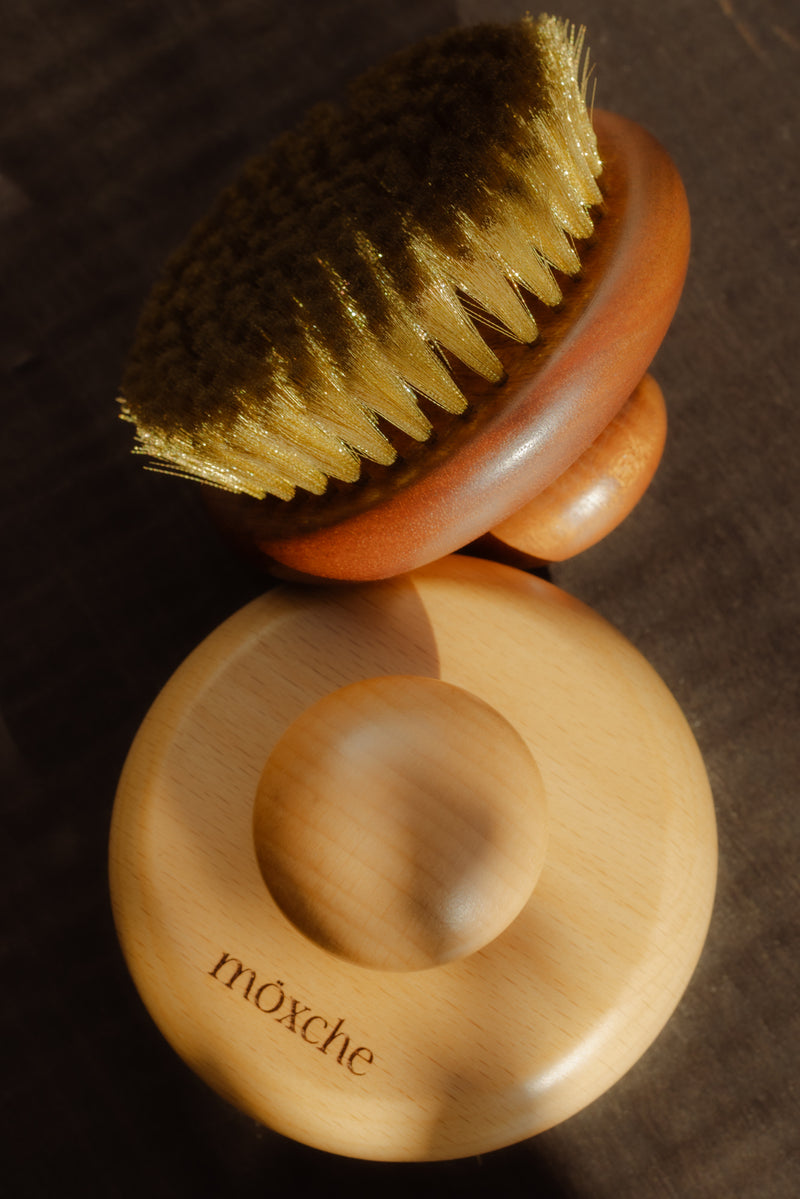
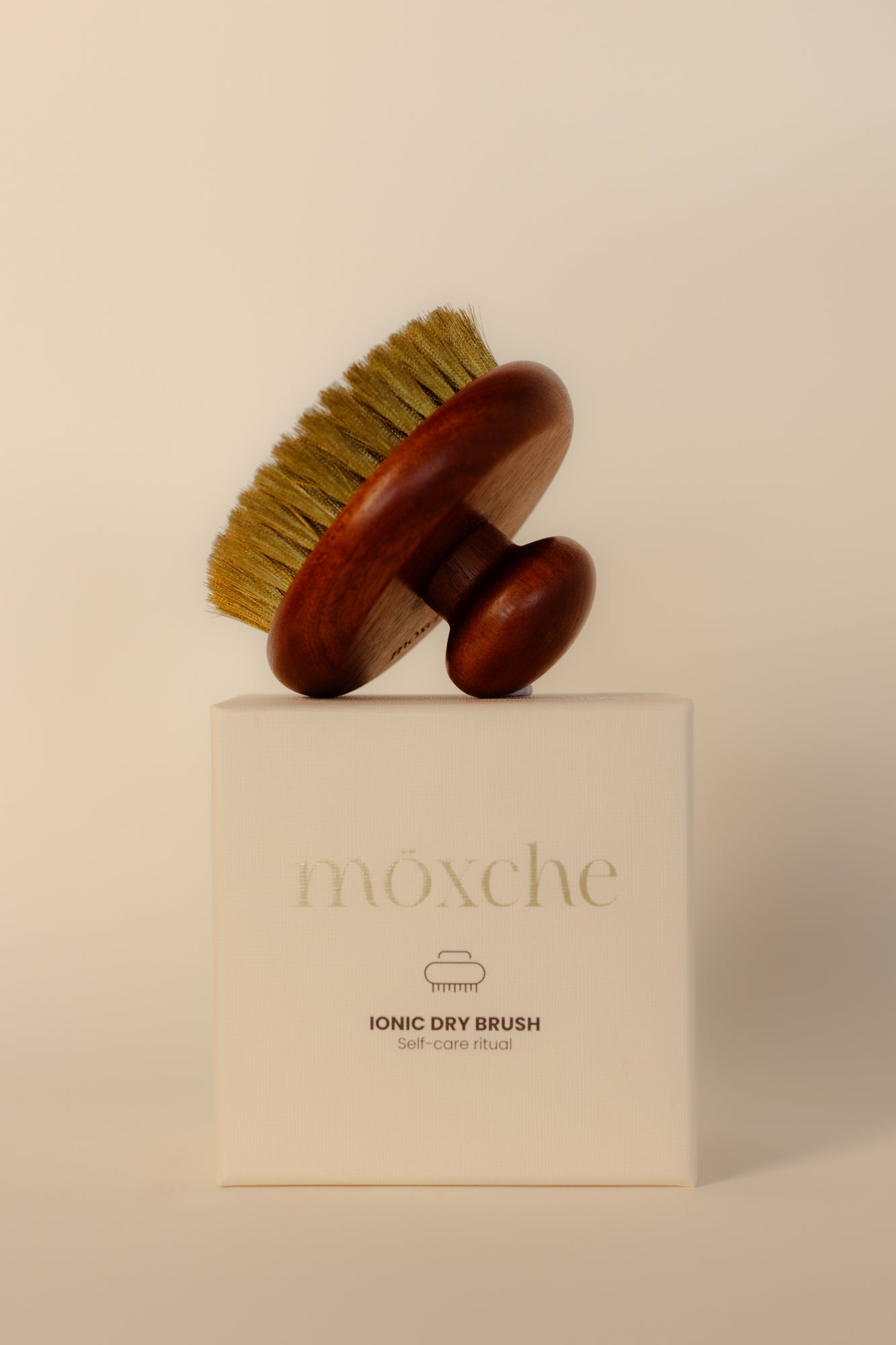
Tap the bristles against your palm after each use to clear loose skin. Store handle-down, bristles-up, somewhere dry. Avoid the bathroom — humidity dulls the wood.
Cleaning
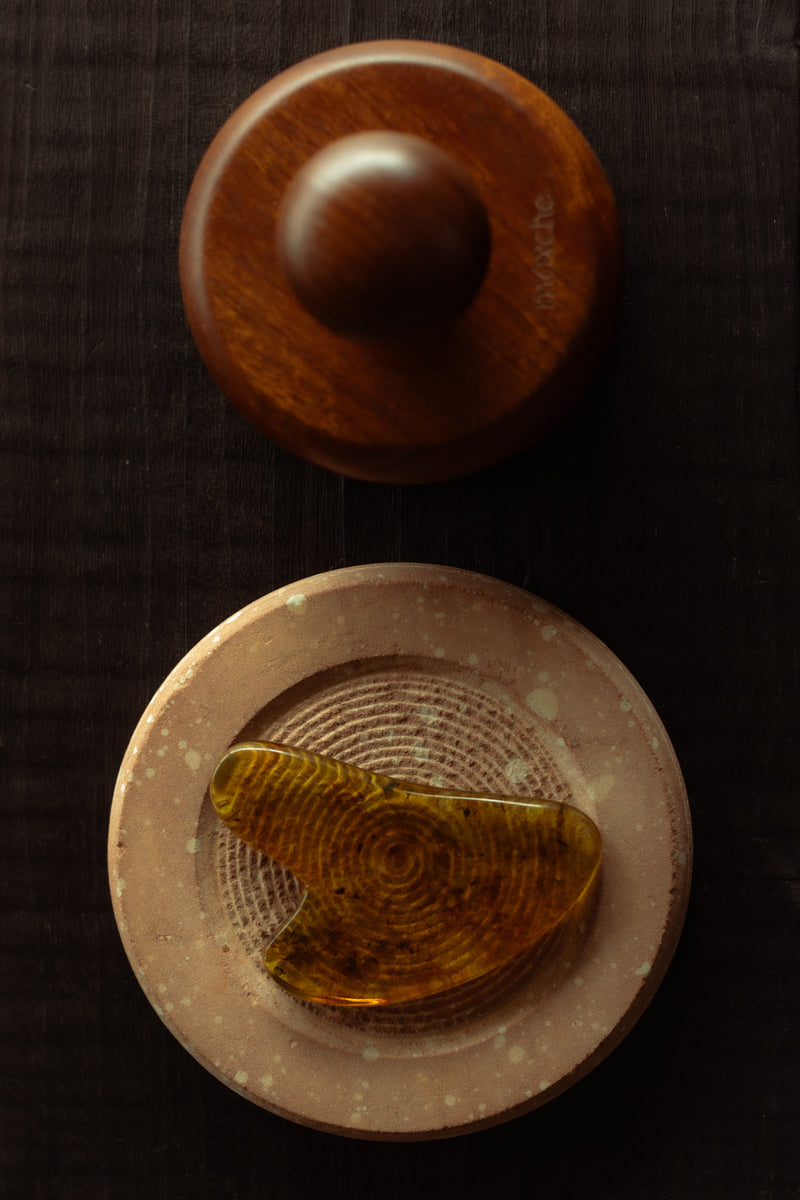
Your dry brush does not require frequent cleaning. If needed, gently wipe the copper bristles with a dry cloth. Avoid water or moisture entirely.
Common questions
Caring for your tools
Why no water on the brush?
Copper oxidises with prolonged moisture, and beech absorbs it. A dry cloth between uses is enough — your brush will deepen in colour over the year, which is the metal aging beautifully, not failing.
How do I know when to replace my brush?
Twelve months is the usual life. You'll know it's time when the bristles lose their spring — they should still feel firm and even, not splayed. Replace before they soften enough to drag rather than stimulate.
The bristles look slightly different — is that a fault?
Minor variation in individual copper bristles is part of how these tools are made by hand. Bristles that are noticeably bent or missing within the first month, however, are a fault — write to us with a photo.
How do I clean the gua sha between uses?
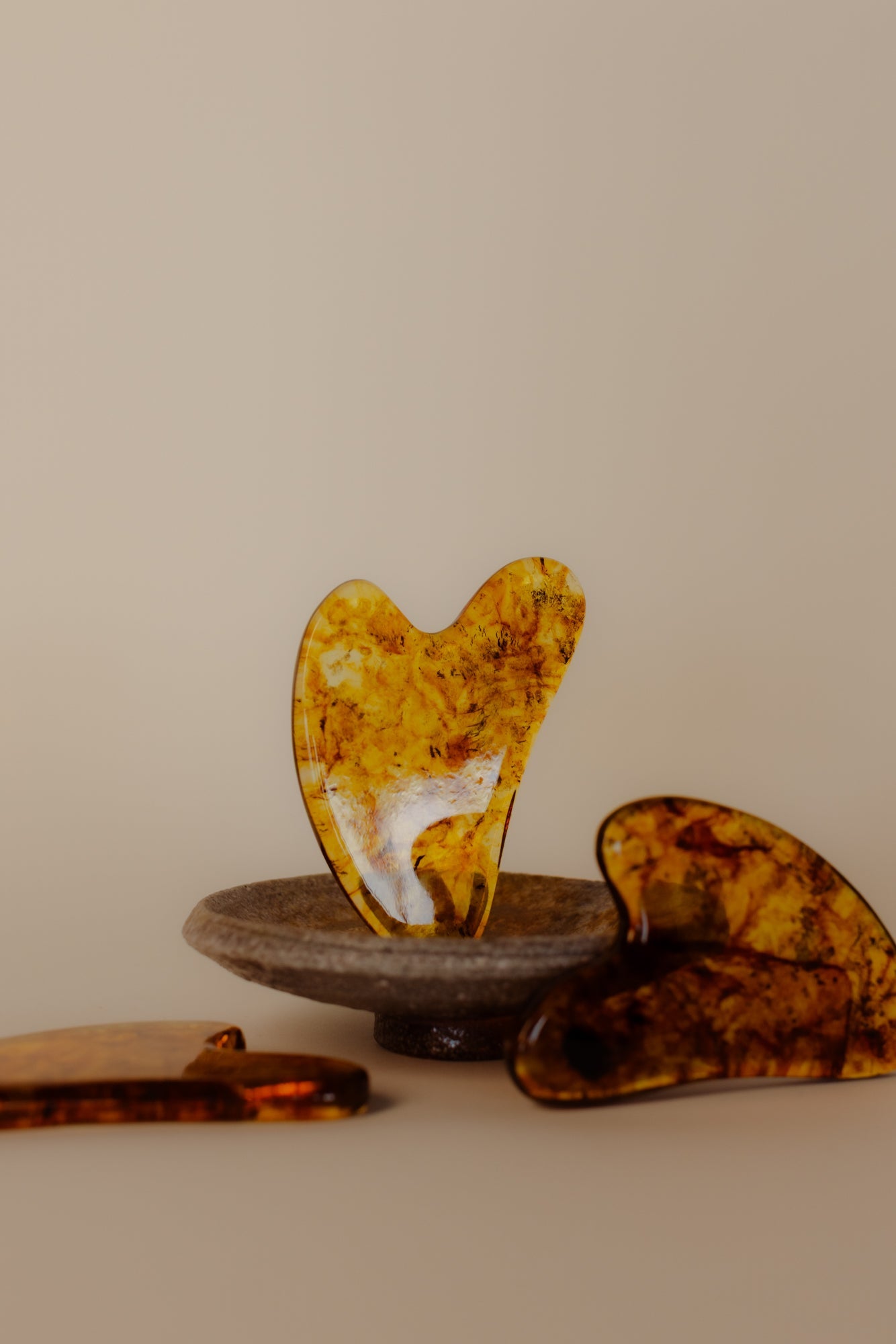
Most days you don't need to. If oil has built up, a soft dry cloth is enough; if you've used it on body or skin with heavier residue, a brief rinse and thorough dry. Always store in its pouch.
What if I drop my gua sha?
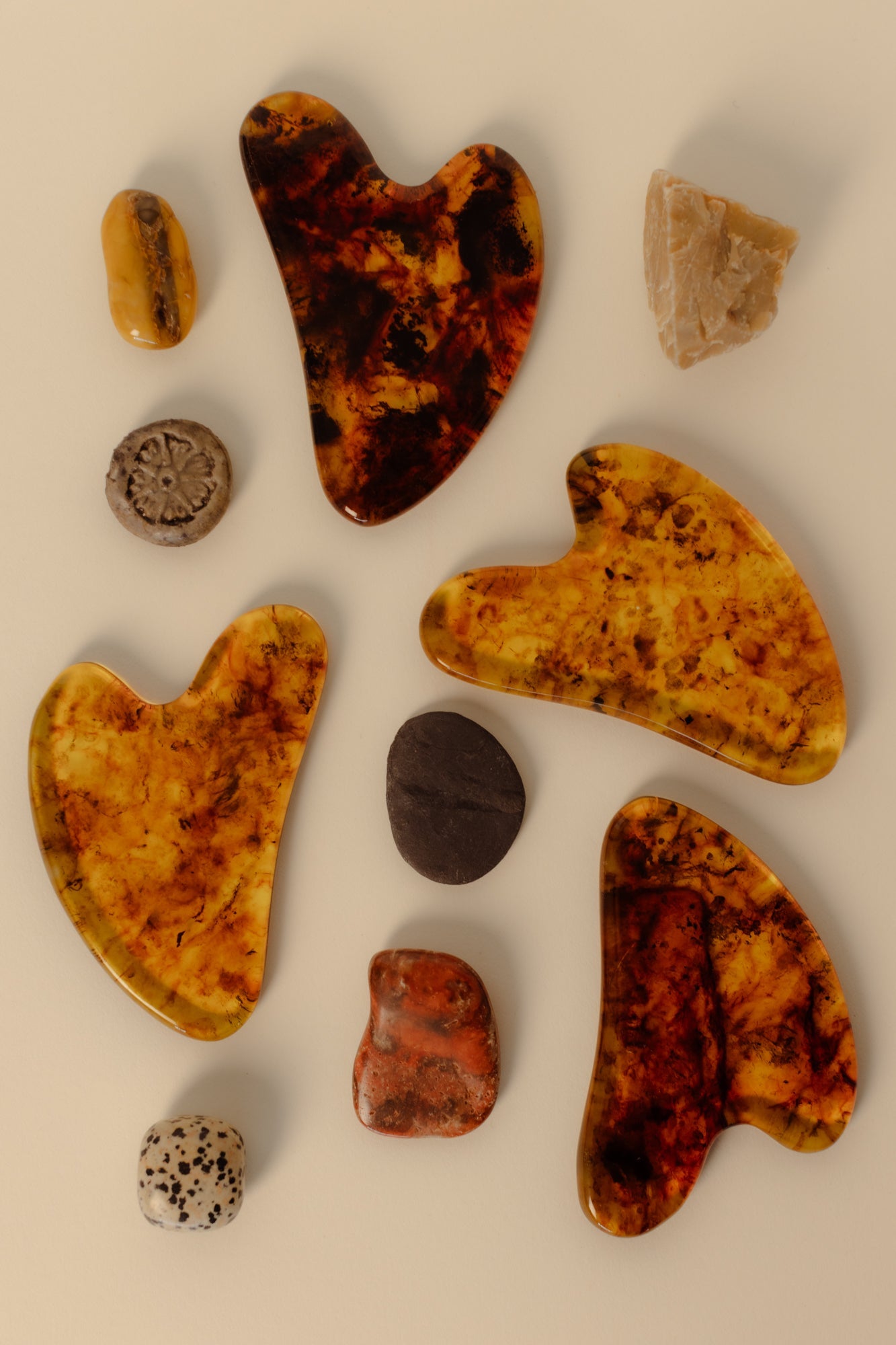
Amber is durable but not unbreakable. Inspect for hairline cracks — small surface marks are usually fine, but cracks running across the body of the tool mean it's reached the end of its life and shouldn't be used.
If something goes wrong
Write to jessica@moxche.net. We replace anything that breaks under normal use within the first 12 months.