Coming soon — sign up to be the first to know
Fascia hero — web with morning dew

möxche · the spiral within

Plate II — Fascia

The Spiral Within · 02

Fascia & Tension

Connective tissue holds the shape of your day. Soften it, or carry it tomorrow.

Why this matters

One continuous sheet.

Fascia is the connective tissue web that wraps every muscle, organ, and bone — a single continuous sheet that gives the body its form. When it dehydrates, when it adheres, when it grips down around stress, you feel it as restriction, dull ache, the sense that the body is carrying something it shouldn't have to carry.

Sliding tools — gua sha, fascial release, slow manual work — rehydrate the tissue and restore its glide. The work is mechanical, not metaphorical. The result is a body that moves with less effort and holds less of yesterday.

The architecture

Layers of the connective web.

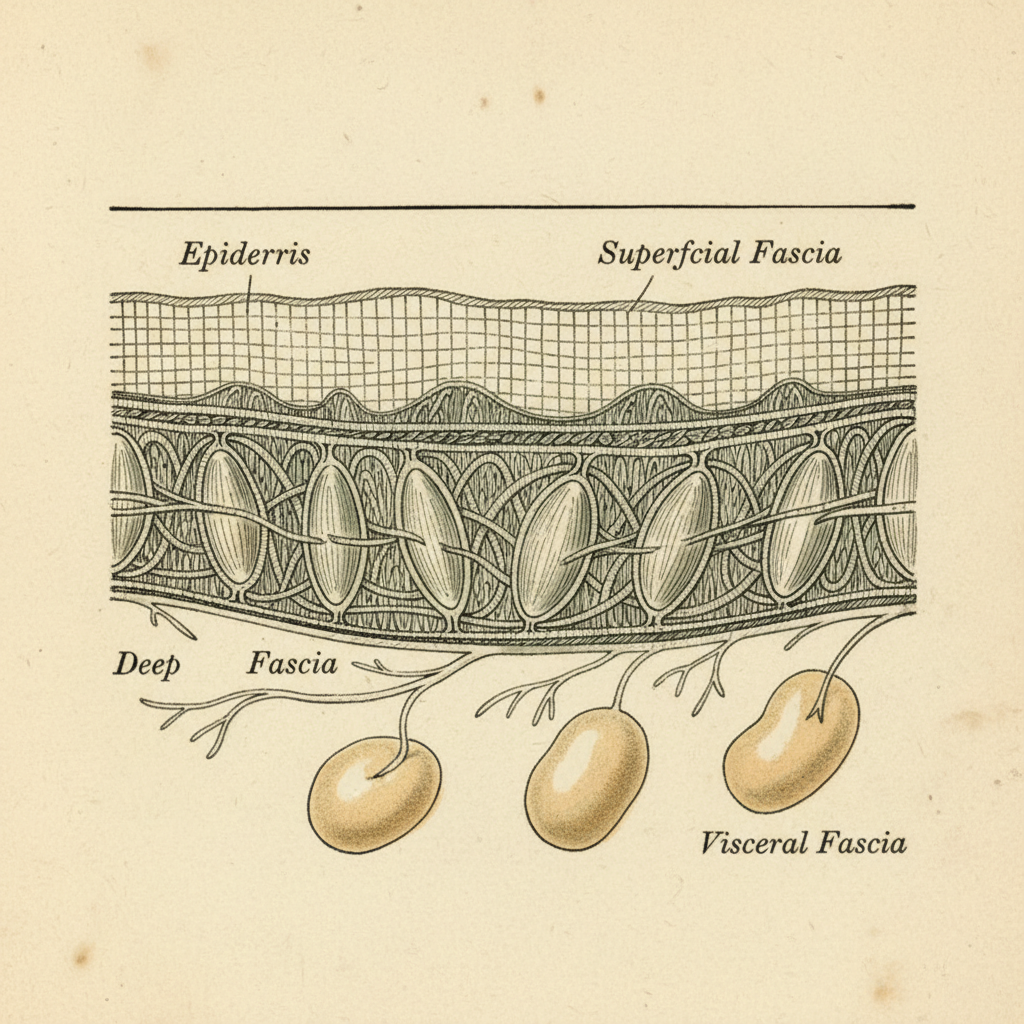
Fascia cross-section — layered ink illustration
Plate II — Fascial layers in cross-section, after Gerlach.
  1. 1

    Superficial fascia

    Just under the skin. The layer gua sha and dry brushing reach. Hydration lives or dies here.

  2. 2

    Deep fascia

    Wraps the muscles. Holds posture, holds stress. The layer that grips when chronically braced.

  3. 3

    Visceral fascia

    Suspends the organs. Connects breath to gut to pelvis. Released through breath more than touch.

  4. 4

    Tension lines

    Predictable patterns: jaw, shoulders, hips. The body's habitual holds, mapped over years.

Studies

Two layers, two practices.

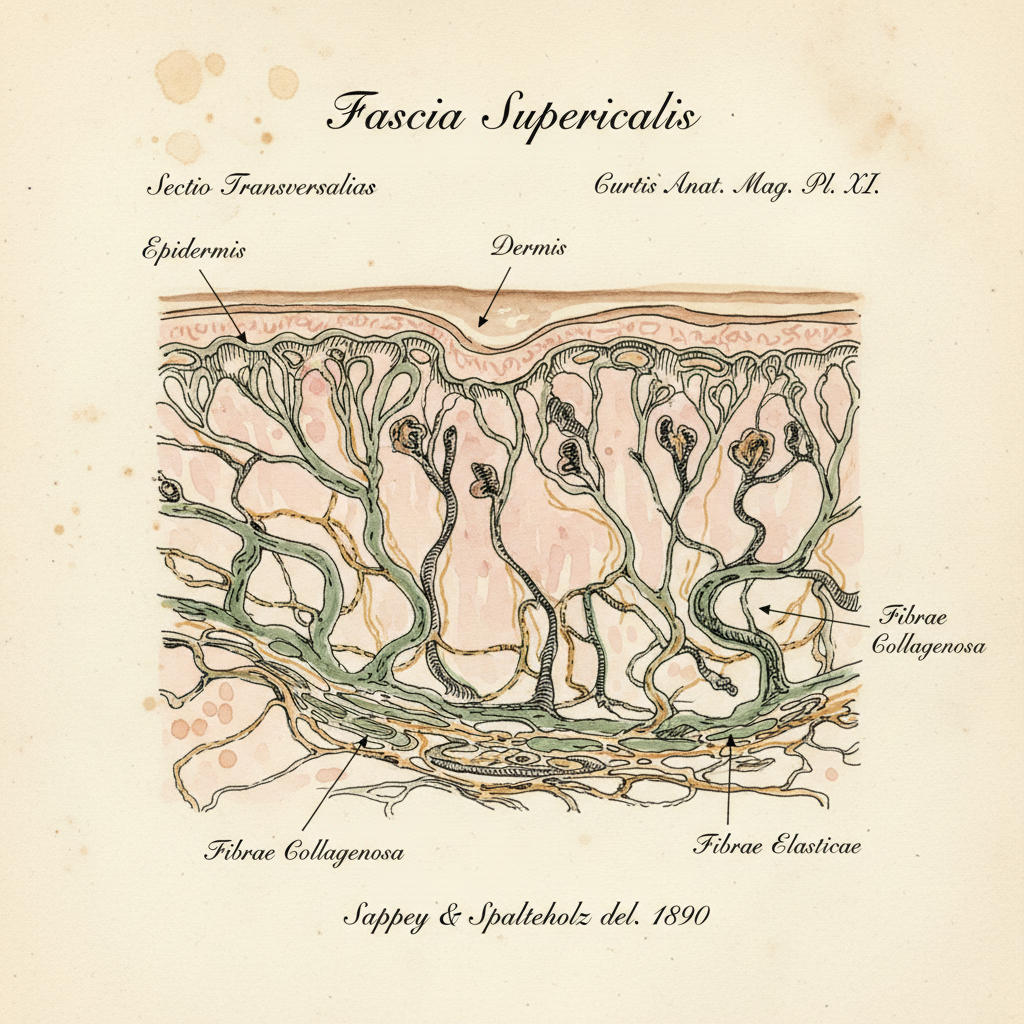
The skin's slip
Superficial fascia, light micrograph

Layer one

The skin's slip

Just beneath the skin is a layer of fascia that, when hydrated, allows the skin to slide cleanly over the muscle below. Dehydrated, it grips. The 'cellulite' look is partly fascial — and partly addressable.

Daily input: brushing for circulation, gua sha for fascial slide, water for hydration.

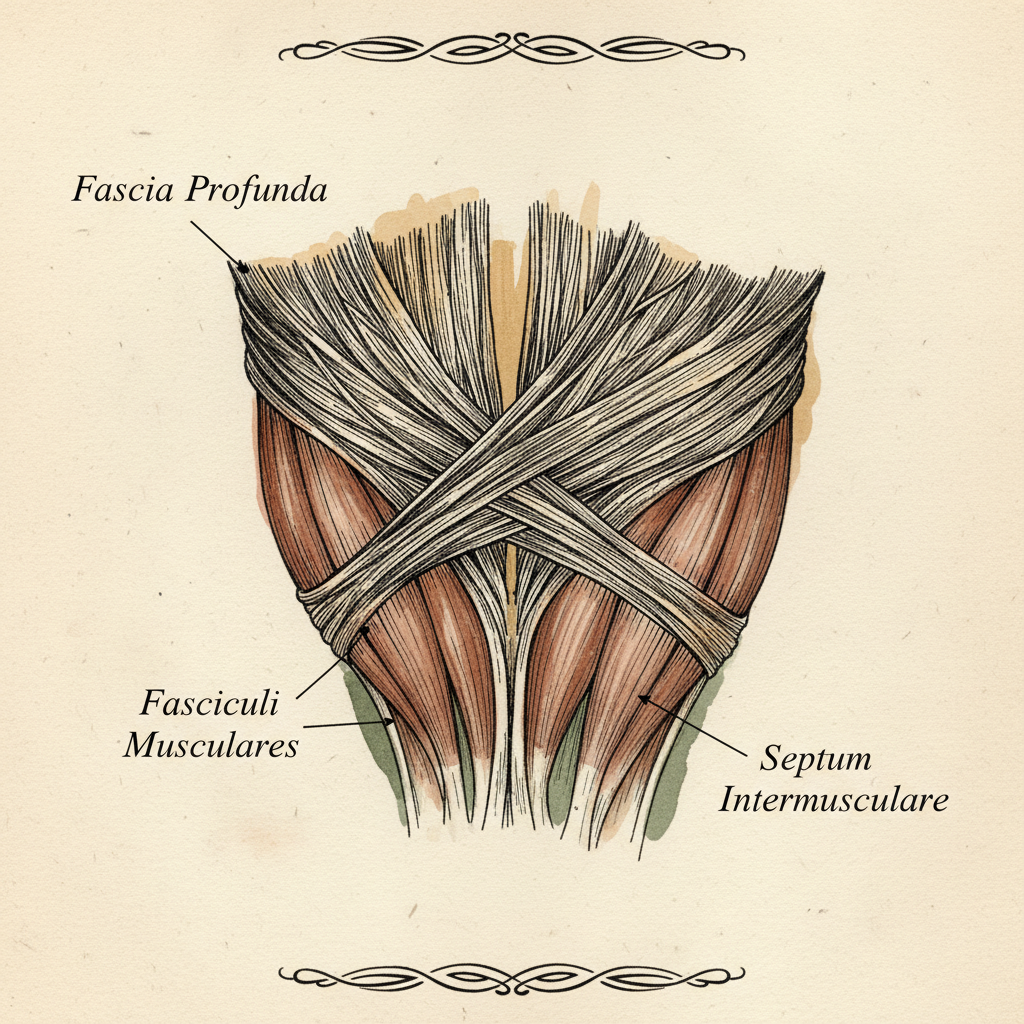
The deep grip
Deep fascia around quadriceps, dissection

Layer two

The deep grip

Deeper fascia wraps muscle bundles and holds postural patterns. Years of forward-rounded shoulders or held jaw end up here as restriction — felt as ache without obvious cause.

Targeted work: sustained pressure, slow gua sha, occasional clinical fascial release.

Going deeper

What connective tissue is, and how to move it.

The current science on fascia has overturned the old view that connective tissue is structural background. It is foreground — and it responds to less force than you'd think.

What fascia actually is

For most of medical history, fascia was treated as packing material — the connective tissue removed during dissection so anatomists could see the muscles underneath. The current understanding is closer to the opposite: fascia is the structural and informational matrix that holds the body together, and the muscles are individual instruments embedded inside one continuous sheet.

Anatomically, fascia is layered: superficial fascia just beneath the skin, deep fascia surrounding muscle bundles, and visceral fascia suspending the organs. Compositionally, it is largely collagen and elastin in a hydrated ground substance, with embedded mechanoreceptors that make it one of the most densely innervated tissues in the body — sensitive to slow pressure, sliding contact, and sustained tension.

That sensitivity is the reason it responds to the kind of bodywork that doesn't look like it should be doing much. Slow gua sha, light manual contact, sustained gentle pressure — these don't move muscle. They move fascia. The tissue rehydrates, the layers unstick, and the body's range of effortless motion returns.

Why it stiffens, why it holds

Fascia stiffens for predictable reasons. Dehydration at the cellular level reduces the slip between layers; the tissue grips. Repetitive posture — sitting, scrolling, driving — lays down adhesions where the body doesn't move through full range. Sustained sympathetic activation from chronic stress keeps the connective tissue contracted; the body braces and forgets to release.

Most adults walk around with predictable fascial holding patterns. The jaw and base of skull, from screen-time and held breath. The front of the chest and shoulders, from a forward-rounded posture. The hip flexors and pelvic floor, from sitting. The plantar fascia of the feet, from poor footwear. None of these are injuries. They are the body adapting to what is asked of it daily.

The cost is low-grade restriction that builds. A body whose fascia hasn't been moved is a body that aches without obvious cause, recovers slowly, and looks more held than it is.

What gua sha actually does to fascia

Gua sha is one of the oldest fascia tools. Used correctly, it does three things at once: it shears the fascial layers against each other (restoring slip), it stimulates blood flow to dehydrated tissue (rehydrating it from the inside), and it provides slow mechanoreceptor input that signals the nervous system to release the tissue's bracing pattern.

The bruising — sha — that traditional gua sha can produce is not the goal of facial work and is rarely appropriate on the face. On the body, mild redness or sha can be appropriate to certain therapeutic contexts; on the face, the same pressure causes capillary damage. The tools we make are calibrated for the gentler, daily work.

The fascia softens. The session feels less like a treatment and more like a slow conversation.

How you'll know it's working

Fascial change is felt, not seen, in the first weeks. Three signals to track:

  • Range of motion. Notice the first stretch in the morning. After ten days of daily gua sha or fascial work, the same stretch should feel deeper without effort. The tissue is yielding.
  • Held tension at the jaw and shoulders. Many people don't realise how much they brace until the bracing softens. A jaw that no longer aches by 4pm is fascial.
  • Recovery from intensity. Hard workouts, long days, stressful weeks — fascia that is mobile recovers faster. The body comes down quicker.

Visible changes — facial sculpt, body contour — emerge later, around the eight-to-twelve week mark, and require consistency. The mechanism is real but slow.

When self-care isn't enough

Acute injury is not a self-care situation. Recent trauma, sharp pain, swelling, or restricted range from accident or strain warrants assessment by a physiotherapist, osteopath, or sports therapist before any home work resumes. Pushing into acute tissue is how minor injuries become chronic.

Long-standing chronic patterns — frozen shoulder, plantar fasciitis that hasn't responded to home care, jaw pain with TMJ involvement — also benefit from in-clinic work first. A trained fascial therapist can find and release patterns the home practice can't reach. Daily home gua sha is excellent maintenance between sessions and prevention of re-development. It is not a substitute for skilled hands when the pattern is set.

Common misconceptions

What people get wrong about fascia.

Five things we hear when someone tells us they've 'tried gua sha and it didn't work'. Each of these is correctable.

  • Myth

    Stretching elongates fascia.

    Reality

    Static stretching changes neural tone (your nervous system permits more range) and short-term tissue hydration. It does not lengthen fascia structurally; the collagen matrix is too strong. Long-term fascial change comes from sustained, slow, mechanical input, not held stretches.

  • Myth

    If gua sha doesn't bruise, it's not working.

    Reality

    Bruising on the face indicates capillary damage. On the body, sha can be intentional in certain therapeutic contexts but is rarely needed for daily fascial maintenance. Gentle sliding pressure with appropriate oil moves fascia without damaging the small vessels above it.

  • Myth

    Foam rolling is the same as fascial work.

    Reality

    Foam rolling primarily affects muscle tone and the autonomic nervous system. The pressure and duration aren't right for fascial change. Sliding tools at lower pressure for longer — gua sha, scraping, slow manual work — target fascia specifically.

  • Myth

    A 'knot' in your back is muscle tension.

    Reality

    What people call a knot is usually a fascial adhesion — layers of connective tissue that have lost their slip. Massaging the muscle under it gives temporary relief. Restoring fascial slide through slow sliding work changes it for longer.

  • Myth

    Pain in fascial work means it's working.

    Reality

    Discomfort can accompany change, but sharp pain means the tissue is being pushed past its capacity. The body's pain signal is the limit, not the goal. Effective fascial work feels like deep, sustained pressure, not aggression.

From the field

The tool that serves this pillar

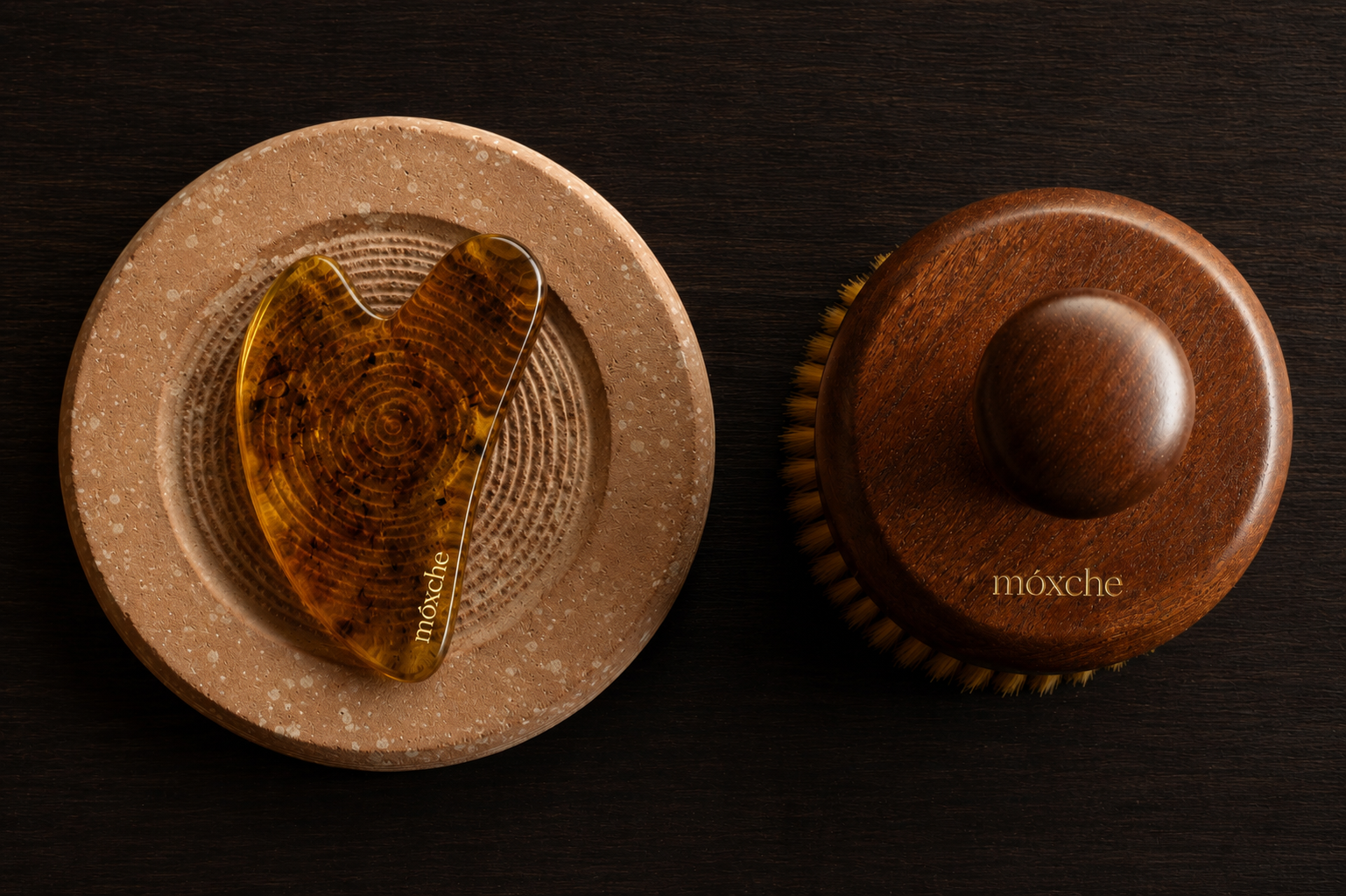
Baltic Amber Gua Sha

Amber is warm. Where a cold stone makes the skin contract and the fascia brace, amber meets the body where it is. The fascia softens. The session feels less like a treatment and more like a slow conversation.

Slow, sweeping strokes along the muscle. Light pressure on the face, firmer along the body. The tissue rehydrates as you work.

Explore the gua sha