
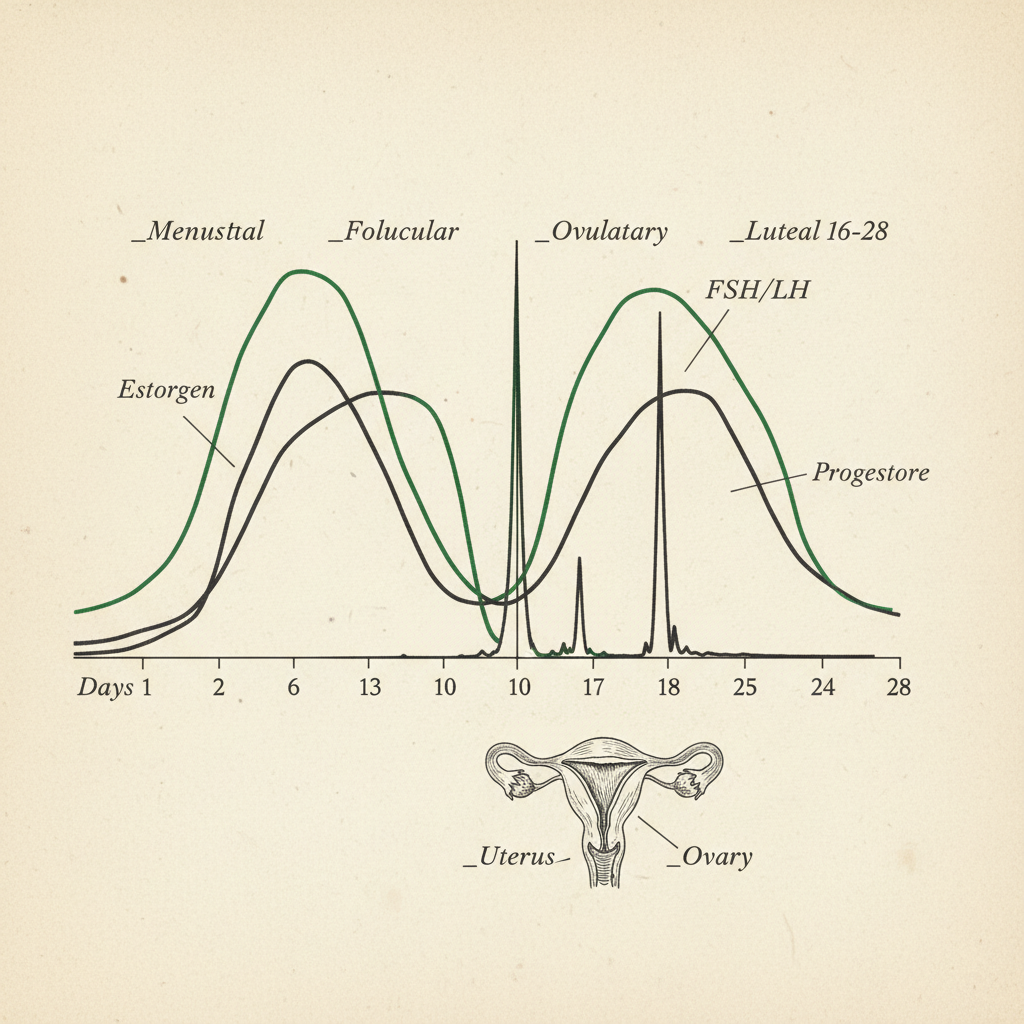



How hormones actually move through the body
Hormones are signalling molecules that need to be produced, delivered, used, and then cleared. The clearance step gets the least attention and is often the bottleneck. Estrogens, for example, go through a two-phase process in the liver: Phase I uses cytochrome P450 enzymes to make them more reactive, then Phase II conjugates them with sulfate, glucuronic acid, or glutathione to make them water-soluble. From there, they leave the body via bile (into the gut, where they may or may not get reabsorbed) or via the kidneys (into urine).
Critically, the lymph is involved at multiple steps. Lymphatic flow supports liver clearance. Lymph carries hormonally active fluid out of breast tissue, the pelvis, and the thyroid region. When the lymph stagnates, hormones recirculate longer than they should — which the body experiences as heavier periods, breast tenderness, mood volatility, and skin clearance happening through the face instead of the toilet.
This is why hormonal symptoms often improve with lymphatic and liver-supportive practices before any specific hormonal intervention. The clearance pathway, addressed first, makes everything else work better.


