Coming soon — sign up to be the first to know
Skin hero — layered rose cross-section

möxche · the spiral within

Plate III — Cutis

The Spiral Within · 03

The Skin

The skin reflects what the body is processing. Read it like weather.

Why this matters

An honest organ.

The skin is the largest organ of the body and the most honest one. It signals what the gut is processing, what the lymph is clearing, what the hormones are rebalancing, what the nervous system is holding. Topical products work on the surface. The skin you actually want is grown from underneath.

This pillar treats the skin as a window, not a target. We look at face mapping, microcirculation, the lymphatic terrain of the face, and the daily practices — gua sha, breath, hydration — that change the skin from the inside.

The architecture

Reading the face.

Face mapping diagram — zones to organs
Plate III — Face mapping, integrative reading.
  1. 1

    Forehead

    Reflects digestion and hydration. Persistent breakout: look at the gut, not the cleanser.

  2. 2

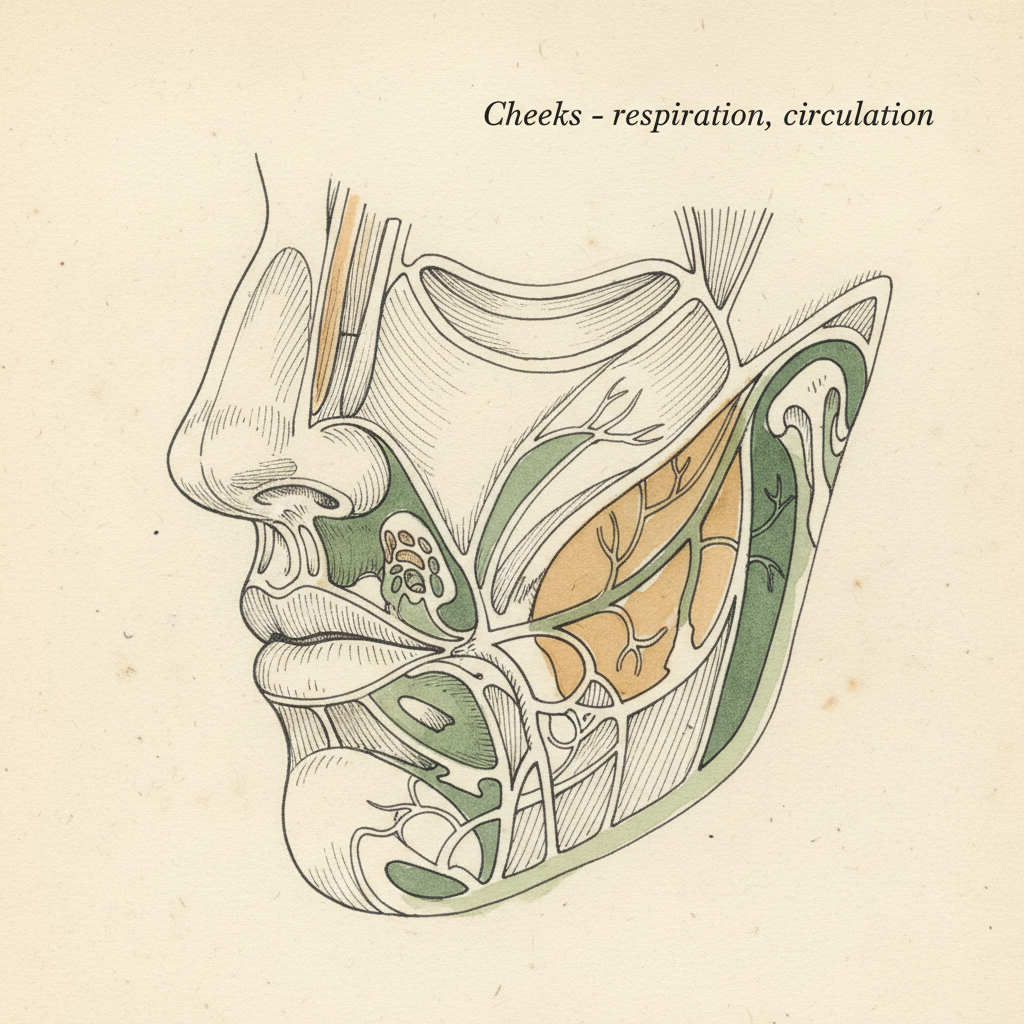
    Cheeks

    The lung and respiratory map. Redness or dullness often tracks circulation and breath.

  3. 3

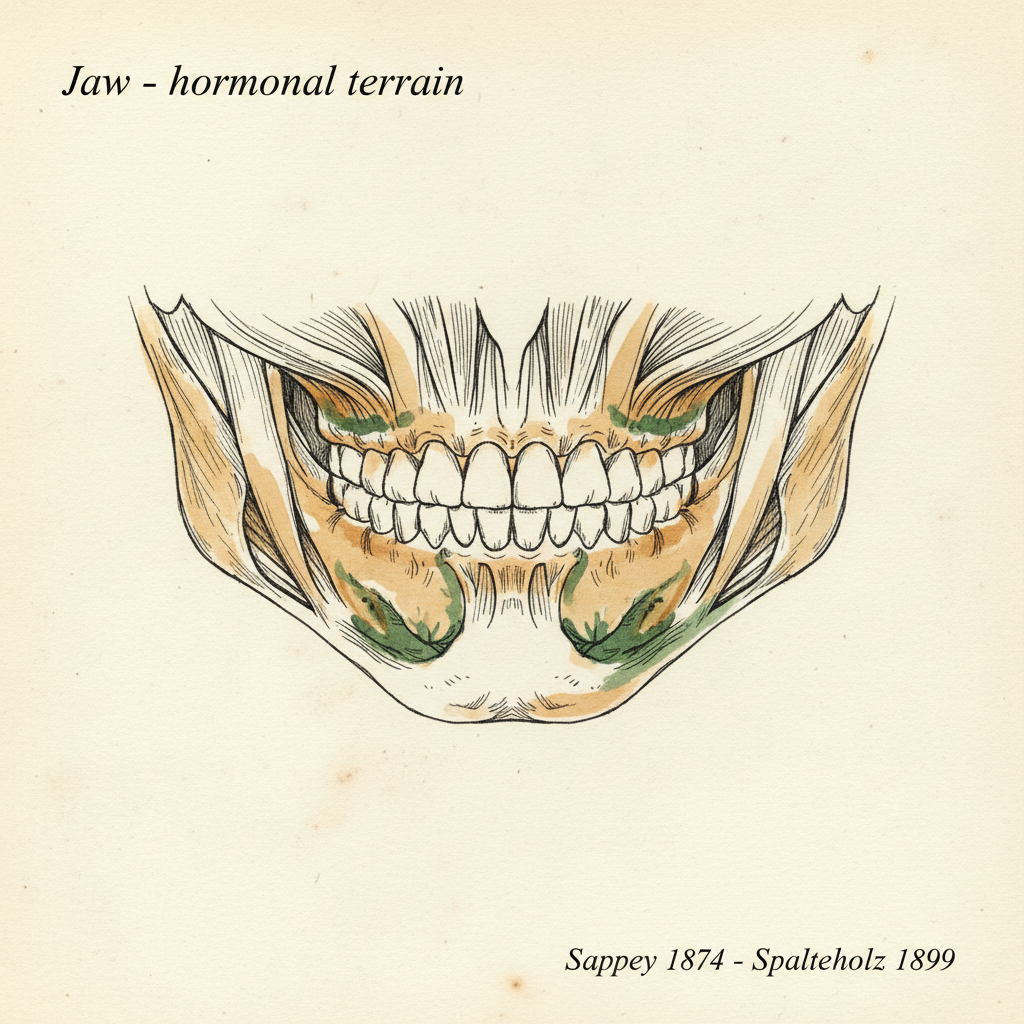
    Jaw & chin

    The hormonal terrain. Cyclical breakouts here are messages, not mistakes.

  4. 4

    Under-eye

    The kidney and lymphatic indicator. Puffiness here is almost always drainage.

  5. 5

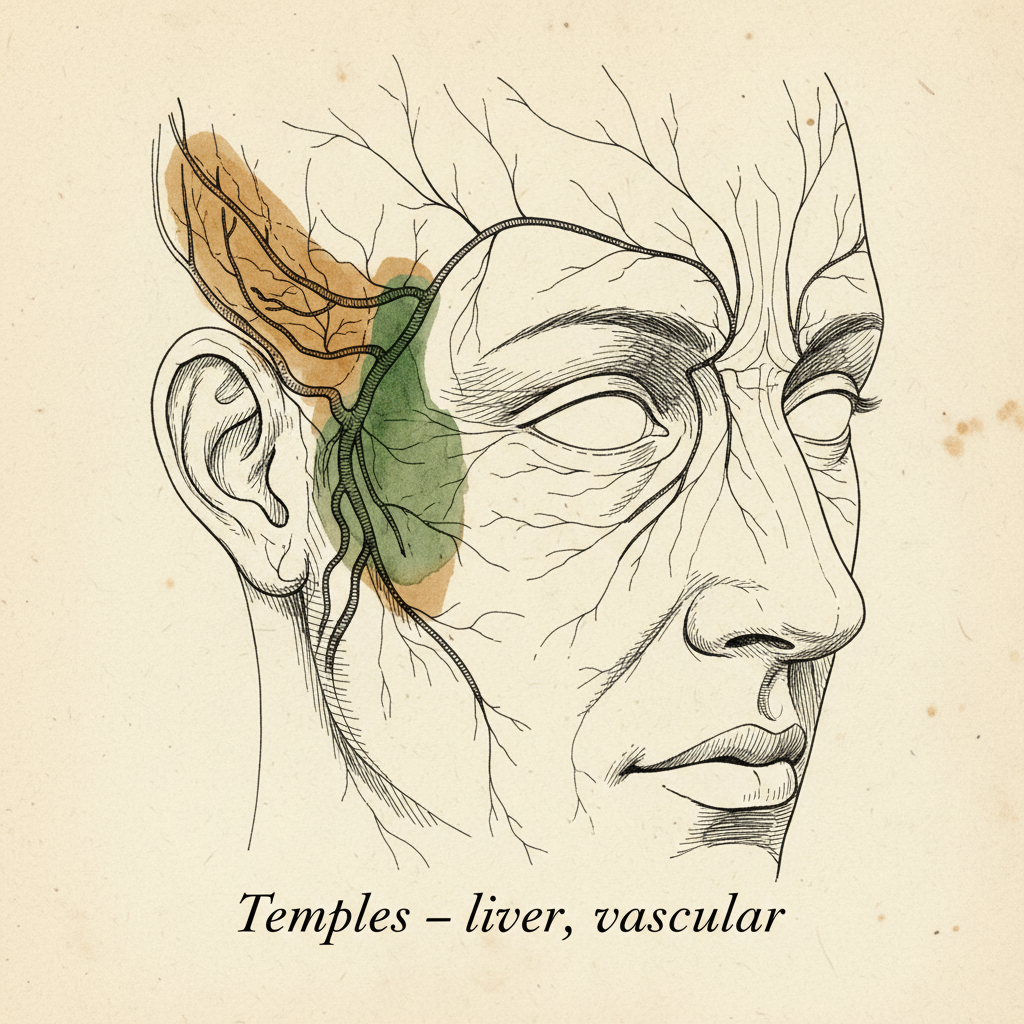
    Nose & temples

    Cardiovascular and liver. A steady flush points inward.

Reading the face

Five zones, five systems.

Each region of the face reflects an internal system. Read the skin like weather — what's clearing, what's congested, what's asking for support.

Forehead zone macro
Forehead — digestion, hydration
Cheek zone macro
Cheeks — respiration, circulation
Under-eye zone macro
Under-eye — kidney, lymph
Jaw zone macro
Jaw — hormonal terrain
Temples zone macro
Temples — liver, vascular

Going deeper

The skin as a system, not a surface.

If you treat the skin like a target, you spend forever chasing symptoms. If you treat it like a window, the work becomes simpler — and the results last longer.

What the skin actually reflects

The skin is the body's largest organ and its most communicative one. It is metabolically active, immunologically intelligent, and continuously regenerating — a turnover of roughly twenty-eight days at twenty, slowing to forty-five days or longer with age. What appears on its surface is downstream of what is happening systemically.

Three internal systems show up on the face most reliably. The gut writes itself across the skin through inflammation: dysbiosis, food sensitivities, and impaired liver clearance present as redness, breakout patterns, and dull tone. The lymph appears as morning puffiness, under-eye swelling, and the soft heaviness of fluid retention. The hormones show up as cyclical breakouts in predictable zones — the jaw and chin in the luteal phase, the forehead during stress.

This isn't mystical. It's mechanism. The skin is so densely vascularised, so thoroughly innervated, and so close to the lymphatic network that it cannot help but report on the systems beneath it.

Why most skincare works on the wrong layer

The stratum corneum — the outermost layer of the skin — is, by design, a barrier. It exists to keep things out. Most topicals applied to it never reach the living cells beneath. The actives that do penetrate (retinoids, vitamin C, niacinamide, certain peptides) work on a narrow set of surface processes: pigmentation, mild collagen support, barrier repair, antioxidant load.

None of these touch the systems that actually determine skin quality at scale: gut function, hormonal clearance, lymphatic drainage, microcirculation, sleep architecture. A retinoid will refine texture. It will not fix a face that puffs because the lymph isn't moving. A vitamin C serum will brighten. It will not address jaw breakouts that are luteal-phase clearance issues.

This isn't an argument against topicals. It's an argument for proportion. Topicals are surface care. The skin is a system. Care for the system, then layer the surface work on top.

What the daily practice actually does

A daily gua sha session, done correctly, does three things to the skin that no serum can. It increases microcirculation, delivering oxygen and nutrients to the deeper layers where new cells are forming. It mobilises lymphatic drainage across the facial network, reducing the puffiness that ages the face faster than time does. And it provides mechanoreceptor input that signals fibroblasts to support collagen turnover.

The visible result, given consistency, is skin that looks lit from within rather than reflective on the surface. The texture changes — pores look smaller because the surrounding tissue is more supported. The colour evens because circulation is delivering and the lymph is clearing. The shape of the face shifts subtly as fascial holding patterns release.

Topicals work on the surface. The skin you actually want is grown from underneath.

How you'll know it's working

The face responds quickly to gua sha — within one session, you'll see immediate de-puffing and a return of colour. That's circulation. The deeper changes take eight to twelve weeks of consistent practice:

  • Tone evening. Diffuse redness softens. Dark spots don't disappear (that needs other interventions) but the canvas around them lifts.
  • Texture refinement. Skin feels smoother to touch without exfoliating products. Microcirculation supports the deeper layers.
  • Definition. The jawline becomes more visible, not because of weight loss but because lymphatic puffiness has reduced.
  • Cycle awareness. Pre-period breakouts shift in pattern as drainage improves. The body is processing better.

What you should not expect: pigmentation reversal, scar removal, or wrinkle erasure. These need targeted clinical interventions or are simply part of how the skin ages.

When self-care isn't enough

Persistent acne, especially with cystic breakouts, deserves dermatological attention — not because home care is wrong, but because the underlying drivers (hormonal, inflammatory, microbiome) often need targeted assessment. The gua sha practice supports these conditions; it doesn't replace appropriate clinical care.

Sudden changes in skin colour or texture, lesions that don't heal, or asymmetric pigmentation should always be assessed by a dermatologist. So should rosacea, eczema, or psoriasis flares that aren't responding to gentle daily practice. The face is a window — when it's saying something urgent, listen.

Common misconceptions

What people get wrong about skin.

Five things the skincare industry has muddled. Correcting these usually simplifies someone's routine and improves their skin in the same move.

  • Myth

    More products = better skin.

    Reality

    The opposite is closer to true. Layered actives compete, irritate the barrier, and rarely deliver more benefit than the few that work. Most skin improves on a stripped-back routine plus daily systemic care (gua sha, sleep, gut work).

  • Myth

    Gua sha gives instant facelift.

    Reality

    Gua sha gives instant de-puffing, which can look like a lift because the lymph clears and the face decongests. The structural change — fascial mobility, sustained tone — is cumulative and emerges over eight to twelve weeks.

  • Myth

    Skin issues are skin problems.

    Reality

    Most chronic skin issues are systemic issues showing up on the largest organ. Persistent acne often tracks gut and hormones. Dullness tracks circulation and lymph. Treating only the surface is treating the symptom.

  • Myth

    Wrinkles are dehydration — drink more water.

    Reality

    Wrinkles are mostly collagen and elastin loss, plus repetitive expression and sun exposure. Hydration helps the skin look fuller in the short term. It doesn't reverse the structural change. Daily microcirculation and fascial work support the matrix; topicals like retinoids do their part.

  • Myth

    Cold tools are best for de-puffing.

    Reality

    Cold causes capillary contraction, which gives temporary tightening. Warm or room-temperature tools (like amber) keep the lymph and fascia open, doing the actual drainage work. Cold is good for an event; warmth is better for the practice.

From the field

The tool that serves this pillar

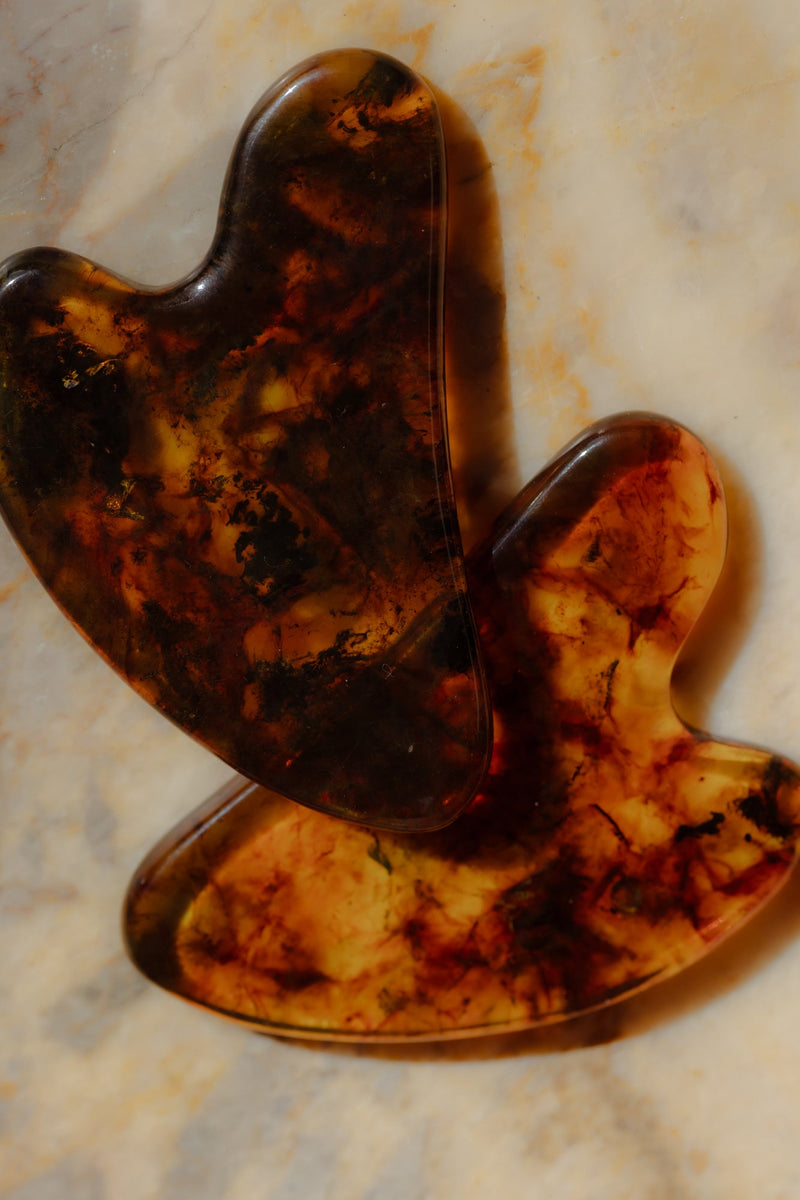
Baltic Amber Gua Sha

Amber is warm where stone is cold. On the face — where the lymphatic vessels sit close to the surface and the fascia is fine — warmth matters. The tissue softens, drainage moves, the colour returns.

Gentle pressure. Outward strokes only — fluid moves away from centre. Two minutes per side, three nights a week.

Explore the gua sha